
Hopeful Futures Workshops for Young People
We often talk about young people’s futures, but it is equally important to discuss the future with young people themselves. In March, Estonia hosted its first futures imagination workshops designed specifically for young people: “Estonia 2050: Hopeful Futures.”
The Estonian Institute for Futures Studies facilitated futures imagination workshops with young people in Viimsi, Pärnu, and Puhja to explore how they envision the future of belonging in Estonia in 2050. The project sought to understand how to have meaningful conversations about the future with young people, support the creation of hopeful future visions, and experiment with the use of sound-based experiences in futures thinking.
A central element of the project was the creation of an immersive audio experience. During the workshops, participants explored “what if?” questions and developed stories about the life of a person living in a hopeful future. The purpose of the workshops was to help young people experience themselves not as passive observers of the future, but as active creators of it.
The participatory futures workshop format was developed by Lõmaš Kama (Aalto University / ETUI), Liisi Pajula (University of Tartu), and Johanna Vallistu (ETUI / Tallinn University of Technology)
Workshops in Viimsi, Puhja, and Pärnu
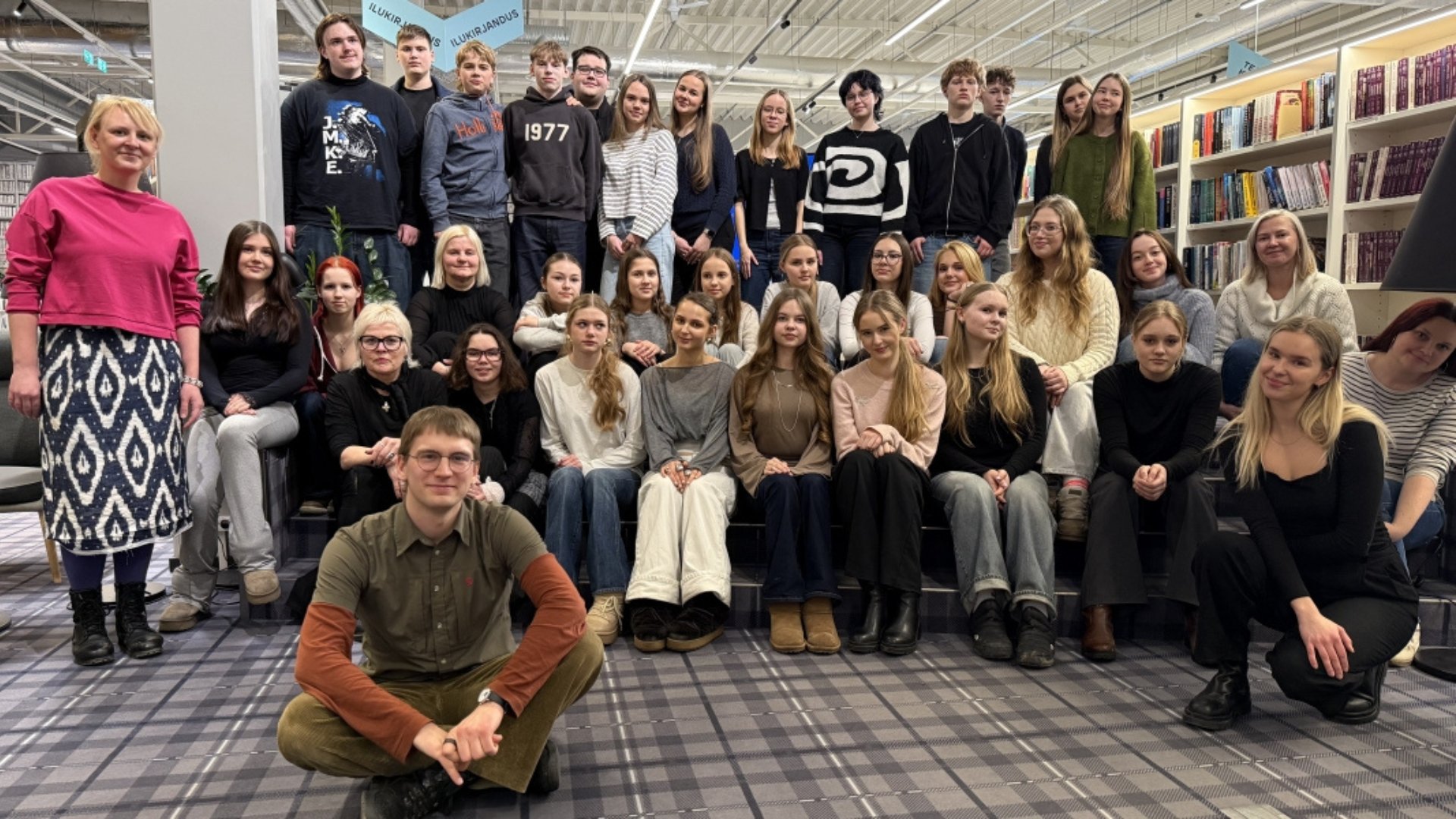
Nearly 40 active young people from the Viimsi Youth Roundtable Viimsi Noorte Jutud were the first participants with whom we explored possible futures.
“We live in the present, but it is our mindset that shapes tomorrow’s future.”
– Emilia Eller, Chair of the Viimsi Youth Council

At the Puhja Youth Centre, the workshop brought together young people and youth workers from Puhja and Rannu.

In Pärnu, we met participants at the HUUB Youth Centre.

Key observations from young people’s hopeful futures
✅ 2050 is not far away
Young people’s visions reflected a strong awareness that today’s decisions, values, and habits are already laying the foundations for the future.
✅ The digital future inspires both hope and questions
Technology was seen as a natural part of everyday life. At the same time, participants raised concerns about dependence on digital solutions, potential restrictions on digital access, and questions about where power ultimately resides.
✅ Remaining human in the age of AI becomes increasingly important
The more digital the world becomes, the more valuable self-management, critical thinking, self-awareness, and the ability to understand one’s own needs will be.
✅ Urban and rural life should complement rather than compete with each other
Many young people envisioned living close to nature while maintaining access to cities, services, cultural opportunities, education, and social networks.
✅ Future power structures may be global, but young people do not see themselves as passive
Digital corporations, major powers, and online platforms may play an increasingly significant role in society. Nevertheless, young people’s visions highlighted adaptability, resourcefulness, and the ability to navigate complex systems as important sources of agency.
✅ Material well-being remains important
For participants, a hopeful future was not defined solely by sustainability or personal well-being. A good life also included access to desirable products, new opportunities, consumption choices, and ways of expressing personal identity.
✅ Friends and family remain at the centre
Even in a highly digital and rapidly changing world, close relationships, a sense of belonging, emotional security, and spending time with people who matter remained among the most important elements of a positive future.
What did we learn?
The workshops demonstrated that young people are both willing and capable of engaging in meaningful discussions about long-term futures. Their perspectives combined optimism and realism, highlighting both opportunities and emerging challenges. Most importantly, the process reinforced the idea that hopeful futures are not something that simply happen to young people. They are something young people actively participate in shaping.
Methods: Participatory futures workshops, futures imagination, storytelling, audio-based futures experiences, visioning, and youth engagement.

